
There's nothing quite like the aroma of perfectly cooked vegetable rice pilaf recipe filling your kitchen with warm, comforting scents. This one-pot wonder transforms simple ingredients into something truly special, creating fluffy grains of rice perfectly seasoned with aromatic spices and tender vegetables. What makes this vegetable rice pilaf recipe so amazing is how it brings together the best of both worlds ; healthy nutrition and incredible flavor that will have your family asking for seconds.
I've been making this vegetable rice pilaf recipe for years, and it never fails to impress. Whether you're looking for a quick weeknight side dish or something elegant enough for holiday dinners, this vegetable rice pilaf recipe delivers every single time. The secret lies in the technique ; toasting the rice first creates that signature nutty flavor that separates pilaf from ordinary rice dishes.

Why This Mediterranean-Inspired Dish Will Transform Your Dinner Table
This isn't just another rice side dish ; it's a complete flavor experience rooted in centuries of Mediterranean and Middle Eastern cooking traditions. What sets this vegetable rice pilaf recipe apart is the perfect balance of textures and tastes that come together in one beautiful pot. The technique of sautéing aromatics first, then toasting the rice before adding liquid, creates layers of flavor that simple boiled rice just can't match.
The beauty of this vegetable rice pilaf recipe lies in its versatility and the way it brings color and nutrition to any meal. From the bright orange carrots to the vibrant green peas, each vegetable adds not only visual appeal but also essential vitamins and minerals. This vegetable rice pilaf recipe pairs beautifully with grilled meats, roasted chicken, or stands alone as a satisfying vegetarian main course.
Jump to:
Ingredients
- Basmati rice
- Low-sodium vegetable broth
- Olive oil
- Yellow onion, diced
Vegetables & Aromatics:
- Carrots, diced small
- Celery stalks, diced
- Garlic, minced
- Frozen peas
Seasonings & Flavor Enhancers:
- Fresh parsley, chopped
- Bay leaf
- Ground cumin
- Turmeric
- Salt
- Black pepper
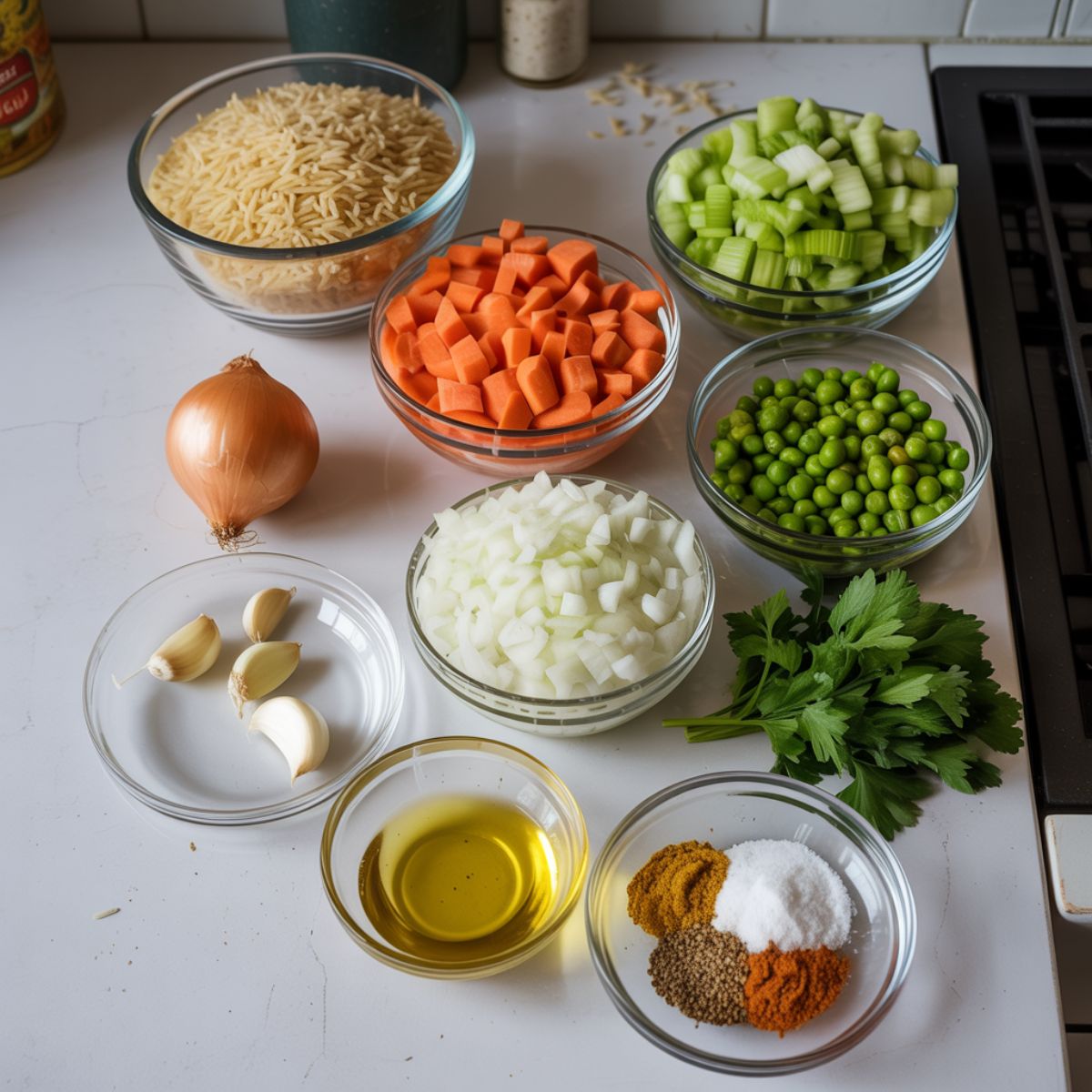
See recipe card for quantities.
Instructions
Prepare Your Mise en Place
- Rinse the basmati rice under cold water until water runs clear, about 2-3 minutes
- Dice all vegetables into uniform small pieces for even cooking
- Measure out all spices and have them ready
- Heat the vegetable broth in a separate pot and keep warm
Build the Flavor Base
- Heat olive oil in a heavy-bottomed pot over medium heat
- Add diced onion and cook for 3-4 minutes until softened and translucent
- Add carrots and celery, cooking for another 3-4 minutes until slightly tender
- Stir in minced garlic, cumin, and turmeric, cooking for 30 seconds until fragrant
Toast the Rice for Maximum Flavor
- Add the rinsed rice to the pot with vegetables
- Stir constantly for 2-3 minutes, toasting until rice becomes slightly golden
- Listen for the gentle crackling sound that indicates proper toasting
- This step is crucial for achieving the signature nutty flavor in your vegetable rice pilaf recipe
Combine and Simmer to Perfection
- Remove from heat and let stand covered for 10 minutes before fluffing
- Carefully pour in the warm vegetable broth and add the bay leaf
- Season with salt and pepper, then bring to a gentle boil
- Reduce heat to low, cover tightly, and simmer for 18-20 minutes
- Add frozen peas in the last 5 minutes of cooking
Expert Cooking Tips
Rice Selection and Preparation
- Choose long-grain rice like basmati or jasmine for the fluffiest results. The key to perfect pilaf is rinsing the rice thoroughly before cooking. This removes excess starch that can make your pilaf gummy instead of fluffy. Never skip the toasting step ; it's what transforms ordinary rice into restaurant-quality pilaf.
Temperature Control Mastery
- Medium heat is your friend when building the flavor base. Too high heat will burn the aromatics before they develop their full flavor potential. Once you add the liquid, maintain a gentle simmer rather than a rolling boil. This ensures even cooking and prevents the bottom from sticking.
Liquid Ratios and Timing
- The standard ratio is 1½ cups liquid to 1 cup rice, but adjust based on your rice variety. Basmati rice typically needs slightly less liquid than other varieties. Don't lift the lid during cooking ; this releases essential steam needed for proper cooking.
Vegetable Cooking Techniques
- Cut vegetables uniformly for even cooking. Harder vegetables like carrots should be added first, while delicate ones like peas go in during the final minutes. This ensures everything finishes cooking at the same time.
Recipe Variations & Substitutions
Grain Alternatives
- While basmati rice creates the most authentic pilaf experience, you can substitute with brown rice for added nutrition. Increase cooking time to 35-40 minutes and add an extra ½ cup of liquid. Quinoa makes an excellent gluten-free alternative ; reduce cooking time to 15 minutes and use a 2:1 liquid ratio.
Vegetable Combinations
- This recipe welcomes creativity with seasonal vegetables. Summer variations can include zucchini, bell peppers, and fresh corn. Winter versions work beautifully with diced winter squash, parsnips, and dried cranberries. Mediterranean versions might include sun-dried tomatoes, artichoke hearts, and fresh herbs like oregano or thyme.
Protein Additions
- Transform this side dish into a complete meal by adding protein. Cooked chickpeas or white beans blend seamlessly into the pilaf. For non-vegetarian versions, shredded rotisserie chicken or cooked ground turkey can be stirred in during the final resting period.
Flavor Profile Variations
- Create Middle Eastern versions with cinnamon, allspice, and pine nuts. Indian-inspired versions benefit from garam masala, ginger, and golden raisins. For a more Mediterranean feel, add oregano, lemon zest, and crumbled feta cheese.
Equipment Recommendations
- The right equipment makes all the difference in achieving perfect pilaf results. A heavy-bottomed pot or Dutch oven distributes heat evenly and prevents hot spots that can burn the rice. A tight-fitting lid is essential for proper steam circulation. If your lid doesn't fit snugly, place a clean kitchen towel between the pot and lid before covering.
- A fine-mesh strainer is invaluable for rinsing rice thoroughly. Sharp knives ensure uniform vegetable cutting, which promotes even cooking. A wooden spoon won't scratch your pot's surface when stirring and toasting the rice.
- For serving, warm bowls help maintain the pilaf's temperature. A large fork works better than a spoon for fluffing the finished rice without crushing the grains.
Storage & Meal Prep Tips
Refrigerator Storage
- Store leftover vegetable rice pilaf recipe in airtight containers in the refrigerator for up to 4 days. Let it cool completely before refrigerating to prevent condensation and sogginess. When reheating, add a tablespoon of water or broth and microwave in 30-second intervals, fluffing between each interval.
Freezer Storage
- This pilaf freezes beautifully for up to 3 months. Portion into meal-sized containers for convenient weeknight dinners. Thaw overnight in the refrigerator before reheating. Frozen pilaf can be reheated directly from frozen ; just add extra liquid and increase heating time.
Make-Ahead Strategies
- Prep all vegetables up to 2 days in advance and store in the refrigerator. The complete dish can be made earlier in the day and kept warm in a low oven or reheated gently before serving. For meal prep, this pilaf works excellently as part of grain bowls or alongside various proteins throughout the week.
Grandma's Golden Secret That Changes Everything
Here's the game-changing secret that separates extraordinary vegetable rice pilaf recipe from the ordinary versions you might have tried before. My grandmother always said the magic happens in the resting period ; that crucial 10-minute rest after cooking isn't just about finishing the cooking process, it's about allowing the flavors to marry and settle into perfect harmony.
But here's the real secret she passed down to me: add a pat of butter right before the final rest, then resist the urge to stir. This creates what she called the "golden crown" ; a slightly crispy bottom layer that adds incredible texture contrast to your vegetable rice pilaf recipe. Trust the process, and you'll understand why this simple technique transforms good pilaf into something truly memorable that your family will request again and again.
FAQ
What vegetables are in rice pilaf?
Traditional vegetable rice pilaf recipe typically includes onions, carrots, celery, and peas as the foundation. However, you can customize with seasonal vegetables like bell peppers, zucchini, corn, or winter squash depending on your preferences and what's available.
What are common mistakes making rice pilaf?
The most common mistakes include not rinsing the rice properly, skipping the toasting step, lifting the lid during cooking, and using too high heat. These errors can result in gummy, unevenly cooked, or burnt pilaf instead of fluffy, separated grains.
What are the key ingredients in pilaf?
Essential ingredients for any pilaf include long-grain rice, aromatics like onions and garlic, fat for toasting, and properly seasoned liquid. The vegetable rice pilaf recipe adds colorful vegetables for nutrition and visual appeal, plus herbs and spices for flavor depth.
What makes a pilaf a pilaf?
A true pilaf is defined by its cooking method: toasting the rice in fat before adding liquid, then cooking covered without stirring. This technique creates fluffy, separate grains with a nutty flavor that distinguishes pilaf from other rice preparations like risotto or simple boiled rice.
Perfect Pairings for Your Next Mediterranean Feast
This vegetable rice pilaf recipe serves as the perfect foundation for creating memorable Mediterranean-inspired meals. The fluffy, herb-scented grains complement both light and hearty dishes beautifully, making it an ideal side for everything from grilled vegetables to roasted meats. What I love most about this vegetable rice pilaf recipe is how it brings together different flavors and textures while remaining satisfying enough to serve as a main course for vegetarian guests.
Consider pairing your homemade pilaf with our Chicken Gyro Bowls Recipe for a complete Mediterranean dinner that transports you straight to the sunny Greek islands. The tender, marinated chicken and fresh vegetables create a perfect contrast to the nutty rice. Alternatively, our Falafel Bowls Recipe makes an excellent vegetarian companion, with crispy falafel and creamy tahini sauce that complement this vegetable rice pilaf recipe beautifully. Both combinations create restaurant-quality meals that are surprisingly simple to prepare at home.
Thanks for cooking with me!
By Lisa Johnson💛
Related
Looking for other recipes like this? Try these:

Pairing
These are my favorite dishes to serve with Vegetable Rice Pilaf Recipe





Vegetable Rice Pilaf Recipe
Equipment
- 1 Heavy-bottomed pot/Dutch oven Even heat, prevents burning
- 1 Tight-fitting lid Essential for steam cooking
- 1 Fine-mesh strainer For rinsing rice thoroughly
- 1 Sharp knife For uniform vegetable cutting
- 1 Wooden spoon Won’t scratch pot
- 1 Large fork For fluffing rice
- 4 Warm bowls For serving
Ingredients
- 1 ½ cups basmati rice Long grain for fluffy texture
- 3 cups vegetable broth Low-sodium, warmed
- 2 tablespoon olive oil Richness + toasting rice
- 1 medium yellow onion Diced
- 2 medium carrots Diced small
- 2 stalks celery Diced
- 3 cloves garlic Minced
- ½ cup peas Frozen, add at end
- 1 bay leaf Subtle herbal note
- 1 teaspoon cumin Ground, earthy
- ½ teaspoon turmeric Golden color
- salt & pepper To taste
- 2 tablespoon parsley Fresh, chopped
Instructions
- Rinse rice until water runs clear (2–3 min). Dice vegetables, warm broth.
- Heat oil, sauté onion 3–4 min. Add carrots + celery, cook 3–4 min. Stir in garlic, cumin, turmeric 30 sec.
- Add rice, stir 2–3 min until lightly golden and crackling.
- Add broth + bay leaf. Season. Cover, simmer 18–20 min. Add peas last 5 min.
- Remove from heat, rest covered 10 min. Fluff with fork.
Notes
- Nutrition information is automatically calculated, so should only be used as an approximation.
Leave a Reply