
There's something magical about biting into a warm, flaky croissant filled with tangy lemon cream. This Lemon Croissant Recipe brings that bakery-style experience right to your kitchen, and trust me, it's easier than you think. Whether you're hosting a weekend brunch or just craving a sweet citrus breakfast pastry, these buttery treats deliver that perfect balance of rich, flaky layers and bright, refreshing lemon flavor.
I've been making this Lemon Croissant Recipe for years, and it never fails to impress. The golden, crispy exterior gives way to soft, tender layers, while the lemon cream filling adds just the right amount of sweetness and zing. No fancy equipment needed; just simple ingredients and a little patience to create these stunning lemon cream filled pastries that taste like they came straight from a French bakery.

Why This Citrus Pastry Stands Out
Let me tell you why this easy citrus breakfast pastry has become my go-to recipe for special occasions. Unlike traditional plain croissants, this Lemon Croissant Recipe adds a refreshing twist that makes every bite feel like sunshine. The combination of buttery croissant dough and zesty lemon filling creates a flavor profile that's both comforting and exciting; perfect for spring brunches, summer gatherings, or anytime you want to treat yourself to something special.
What really makes this bakery style lemon dessert shine is its versatility. You can prepare the components ahead of time, making it ideal for busy mornings or when you're entertaining guests. The lemon cream filling can be made with lemon curd, lemon custard, or even a simple lemon pastry cream, depending on what you have on hand. Plus, this Lemon Croissant Recipe pairs beautifully with coffee, tea, or a fresh fruit salad, making it a complete breakfast or brunch centerpiece that everyone will love.
Jump to:
Ingredients
For the Croissant Dough:
- All-purpose flour
- Granulated sugar
- Active dry yeast
- Salt
- Whole milk (warm)
- Cold unsalted butter
- Egg
For the Lemon Cream Filling:
- Lemon curd
- Cream cheese (softened)
- Powdered sugar
- Lemon zest
For the Lemon Glaze:
- Vanilla extract
- Powdered sugar
- Fresh lemon juice
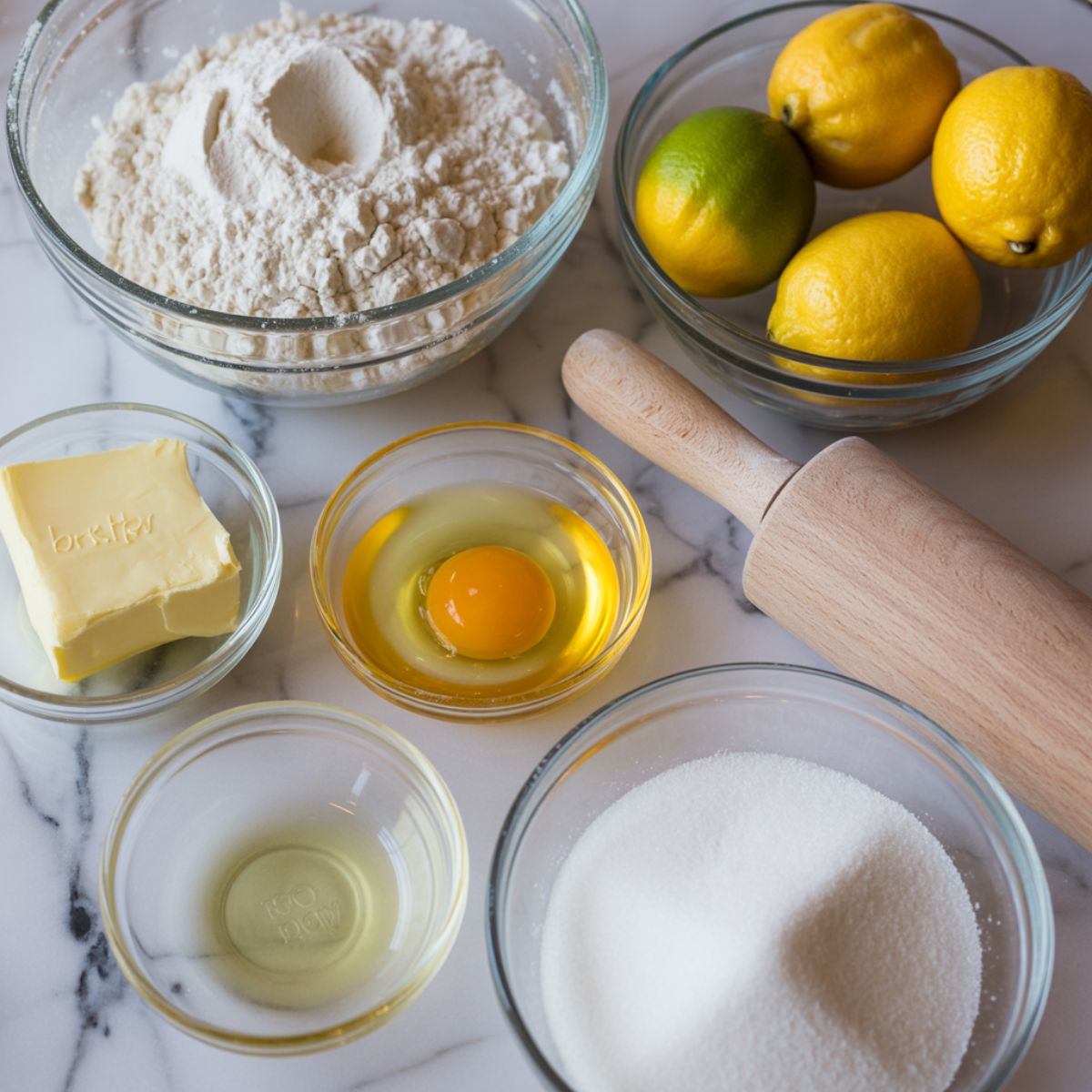
See recipe card for quantities.
Instructions
Prepare the Croissant Dough
- In a large mixing bowl, combine flour, sugar, yeast, and salt.
- Pour in the warm milk and mix until a shaggy dough forms.
- Knead the dough on a floured surface for about 5 minutes until smooth and elastic.
- Wrap the dough in plastic wrap and refrigerate for 30 minutes to relax the gluten.
- Meanwhile, place the cold butter between two sheets of parchment paper and pound it with a rolling pin until it forms a flat rectangle about ½ inch thick.
- Roll out the chilled dough into a large rectangle, then place the butter in the center.
- Fold the dough over the butter like a letter, sealing the edges completely.
Pro tip: Keep everything cold during this process. If the butter starts melting, pop it back in the fridge for 10 minutes.
Create the Flaky Layers
- Roll the dough out into a long rectangle, about 24 inches long.
- Fold it into thirds (like a business letter) to create your first turn.
- Rotate the dough 90 degrees, roll it out again, and fold into thirds for the second turn.
- Wrap in plastic and refrigerate for 30 minutes.
- Repeat this rolling and folding process two more times (four turns total) with 30-minute rests in between.
- After the final turn, refrigerate the dough for at least 2 hours or overnight.
Expert tip: This lamination process creates those signature flaky layers. Don't skip the resting periods; they prevent the butter from breaking through.
Shape Your Lemon Croissants
- Roll the chilled dough into a large rectangle about ¼ inch thick.
- Cut the dough into triangles (about 4-5 inches at the base).
- Make a small notch at the base of each triangle to help with rolling.
- Gently stretch each triangle slightly, then roll from the base to the tip.
- Place the rolled croissants on a parchment-lined baking sheet with the tip tucked underneath.
- Cover loosely with plastic wrap and let them proof in a warm spot for 1.5-2 hours until puffy and jiggly.
- Beat the egg with a tablespoon of water and brush gently over each croissant.
Kitchen hack: A turned-off oven with just the light on creates the perfect proofing environment.
Bake to Golden Perfection
- Remove from the oven and let them cool on a wire rack for at least 15 minutes.
- Preheat your oven to 375°F (190°C) while the croissants finish proofing.
- Brush the croissants with egg wash one more time for extra shine.
- Bake for 20-25 minutes until deep golden brown and flaky.
- The croissants should sound hollow when tapped on the bottom.
Expert Cooking Tips
Temperature Control is Everything
- Keep your ingredients cold throughout the lamination process. If your kitchen is warm, work in shorter intervals and refrigerate the dough more frequently. The butter should stay pliable but not melt; if it starts oozing out, you've lost the battle for flaky layers.
Choosing the Right Butter
- European-style butter (with higher fat content around 82%) creates the most authentic, flaky croissants. Regular butter works too, but you'll notice the difference in richness and flavor.
Perfecting Your Lemon Cream Filling
H3: Mixing the Perfect Filling
- Beat the cream cheese until smooth before adding other ingredients
- Fold in the lemon curd gently to maintain its thick consistency
- Taste and adjust sweetness; some lemon curds are tangier than others
- Chill the filling for at least 30 minutes before using for easier piping
Timing Your Bake
- Watch for visual cues rather than just timing. Your croissants are done when they're deep golden brown (not pale yellow) and have expanded significantly. Underbaked croissants will be doughy inside, while overbaked ones lose their tender interior.
Make-Ahead Magic
- Prepare the dough through all the folds, shape the croissants, then freeze them on a baking sheet. Once frozen solid, transfer to a freezer bag. When ready to bake, let them thaw and proof overnight in the refrigerator, then bring to room temperature and bake as directed.
Filling Options for This Lemon Croissant Recipe
- Use homemade lemon curd for the brightest, freshest flavor
- Add a touch of mascarpone to the cream cheese for extra richness
- Mix in a tablespoon of limoncello for an adult version
- Try lemon pastry cream instead of lemon curd for a lighter texture
Recipe Variations & Substitutions
Dietary Modifications
- Vegan Lemon Croissants Replace butter with high-quality vegan butter (ensure it's cold and firm). Use plant-based milk and substitute the egg wash with a mixture of plant milk and maple syrup. For the filling, use vegan cream cheese and dairy-free lemon curd.
- Gluten-Free Version Use a 1:1 gluten-free baking flour that contains xanthan gum. The texture will be slightly different, but you'll still get a delicious flaky lemon breakfast treat. Add an extra egg to help with structure.
Flavor Variations
- Lemon Blueberry Croissants Add fresh or frozen blueberries to the lemon cream filling for a fruity twist. The berries pair beautifully with the zesty lemon and add gorgeous color.
- Lemon Cream Cheese Croissant Double the cream cheese in the filling and reduce the lemon curd by half for a richer, creamier version that's less tart.
- Meyer Lemon Croissants Substitute regular lemons with Meyer lemons for a sweeter, more floral flavor profile that's absolutely stunning.
Easy Shortcuts
- If making croissant dough from scratch feels overwhelming, use high-quality store-bought puff pastry as a base. While it won't be exactly the same, you'll still create delicious lemon cream filled pastries in half the time. Just roll out the puff pastry, cut into rectangles, add filling, fold, and bake at 400°F for 15-20 minutes.
Creative Filling Ideas
- Lemon and raspberry; tart meets tart in the best way
- Lemon and lavender; floral and sophisticated
- Lemon and white chocolate; sweet and zesty
- Lemon and poppy seed; classic combination with lovely texture
Equipment Recommendations
- Rolling pin ; essential for creating even layers in your dough (a heavy French-style pin works best)
- Bench scraper ; makes dividing dough and cleaning your work surface so much easier
- Stand mixer with dough hook ; saves your arms during the initial kneading (hand kneading works fine too)
- Pastry brush ; for applying egg wash evenly without tearing the delicate dough
- Parchment paper ; prevents sticking and makes cleanup a breeze
- Wire cooling rack ; allows air circulation so the bottoms stay crisp
- Kitchen thermometer ; helps you check milk temperature and ensure proper proofing conditions
- Pizza cutter or sharp knife ; for cutting clean triangles from your dough
- Piping bag with round tip ; makes filling the baked croissants neat and professional
Budget-friendly alternatives: Use a wine bottle as a rolling pin, and a sturdy plastic card works great as a bench scraper. A fork can crimp edges if you don't have a pastry brush.
Storage & Meal Prep Tips
Refrigerator Storage
- Store baked croissants in an airtight container at room temperature for up to 2 days. They taste best when eaten fresh, but you can refresh them in a 300°F oven for 5 minutes to restore some crispness.
Freezing Instructions
Freezing Unbaked Croissants:
- Shape the croissants completely and place them on a parchment-lined baking sheet
- Freeze until solid (about 2 hours)
- Transfer to freezer bags and store for up to 2 months
- When ready to bake, thaw overnight in the refrigerator
- Let them come to room temperature and proof until puffy
- Bake as directed
Freezing Baked Croissants: Cool completely, then wrap individually in plastic wrap and place in freezer bags. Freeze for up to 1 month. Reheat from frozen at 325°F for 10-12 minutes.
Filling Storage
- The lemon cream filling can be made up to 3 days ahead and stored in an airtight container in the refrigerator. Give it a quick stir before using to restore the smooth texture.
Make-Ahead Timeline
- 3 days before: Make the lemon curd and cream filling
- 2 days before: Prepare and laminate the dough through all turns
- 1 day before: Shape the croissants and refrigerate
- Morning of: Proof, bake, fill, and glaze
The One Trick That Changed Everything
Want to know the secret that transforms good croissants into extraordinary ones? It's all about the final proof. Most people rush this step, but here's what I learned from a French baker: your croissants should be so puffy and jiggly before baking that you're almost nervous they'll collapse. When you gently shake the pan, they should wobble like jello. This means the dough has properly fermented and expanded, creating maximum flaky layers.
The second game-changer for this Lemon Croissant Recipe is how you add the filling. Instead of slicing the croissants horizontally (which can compress those beautiful layers), use a piping bag to inject the lemon cream through a small hole at one end. This preserves the structure while distributing the filling evenly. Trust me, this simple switch makes your homemade lemon croissants look and taste just like they came from an expensive bakery.
FAQ
What fillings can I put in a croissant?
Croissants are incredibly versatile! For this Lemon Croissant Recipe, lemon curd and cream cheese work beautifully, but you can also try chocolate ganache, almond cream, Nutella, fruit preserves, ham and cheese, or even savory options like spinach and feta. The key is using fillings that won't make the pastry soggy.
What is a common mistake in croissants?
The biggest mistake is letting the butter melt during lamination. When the butter melts into the dough instead of staying in distinct layers, you lose that signature flaky texture. Always keep your dough cold, work quickly, and refrigerate whenever the butter starts softening. Another common error is under-proofing before baking.
Do cheese and lemon go together?
Absolutely! Cream cheese and lemon are a classic pairing because the tangy, rich cream cheese balances the bright acidity of lemon perfectly. This combination is popular in cheesecakes, frostings, and pastry fillings like this Lemon Croissant Recipe. The creaminess mellows the tartness while enhancing the citrus flavor.
What is the mistake for lemon curd?
The most common mistake when making lemon curd is cooking it over too high heat, which causes the eggs to scramble rather than thicken smoothly. Always use low to medium-low heat and stir constantly. Another error is not straining the curd, which can leave bits of cooked egg in the final product. For the smoothest filling in your lemon cream croissant, always strain through a fine-mesh sieve.
Time to Bake Your Own Sweet Lemon Cream Croissant
Now that you’ve discovered all the secrets to mastering this Lemon Croissant Recipe, it’s time to bring that bakery magic into your kitchen. This Lemon Croissant Recipe may look fancy, but it’s truly approachable — even if you’re new to baking. Each flaky layer, filled with zesty lemon cream, proves why this Lemon Croissant Recipe is a must-try for breakfast or brunch. The buttery aroma, the golden crust, and that sweet citrus bite make this Lemon Croissant Recipe pure perfection. Your family will love every bite, and you’ll feel proud knowing you created these bakery-style lemon croissants from scratch.
Once you've mastered this Lemon Croissant Recipe, you'll find yourself making it again and again for brunches, holidays, or just because you deserve something special. If you loved these zesty pastries, you'll also want to try our rich Chocolate Hazelnut Cake Recipe for chocolate lovers, or our decadent Salted Caramel Cake Recipe for the perfect balance of sweet and salty. Don't forget to share your baking success in the comments below; I'd love to hear how your croissants turned out!
With love and flaky layers
By Lisa Johnson💛
Related
Looking for other recipes like this? Try these:


Pairing
These are my favorite dishes to serve with Lemon Croissant Recipe



Lemon Croissants Recipe
Equipment
- 1 Rolling Pin For rolling out even dough layers
- 1 Bench scraper Helps fold and shape dough neatly
- 1 Stand mixer with dough hook Optional but saves kneading time
- 1 Pastry brush For egg wash and lemon glaze
- 1 Wire cooling rack Keeps croissants crisp after baking
- 1 Kitchen thermometer Ensures proper yeast activation
- 1 Parchment paper Prevents sticking during baking
- 1 Piping bag with round tip For filling croissants neatly
Ingredients
Croissant Dough
- 3 cups All-purpose flour Provides structure and flaky texture
- 0.25 cup Granulated sugar Adds subtle sweetness
- 1 tablespoon Active dry yeast Helps dough rise
- 1 teaspoon Salt Balances flavors
- 1 cup Whole milk (warm) Activates yeast
- 1 cup Cold unsalted butter Creates flaky layers
- 1 large Egg For egg wash
Lemon Cream Filling
- 1 cup Lemon curd Store-bought or homemade
- 4 oz Cream cheese (softened) Adds creaminess to filling
- 2 tablespoon Powdered sugar Sweetens the filling
- 1 tablespoon Lemon zest Boosts lemon flavor
Lemon Glaze
- 1 cup Powdered sugar For glaze
- 2–3 tablespoon Fresh lemon juice Adjust for glaze consistency
- 0.5 teaspoon Vanilla extract Adds smooth flavor to glaze
Instructions
- Mix flour, sugar, yeast, and salt. Add milk to form dough.
- Knead until smooth; chill 30 minutes.
- Pound butter into flat sheet; encase in dough.
- Roll and fold dough 4 times, chilling between turns.
- Roll into rectangle; cut triangles; shape croissants.
- Proof until puffy and jiggly (1.5–2 hours).
- Brush with egg wash, bake at 375°F for 20–25 minutes.
- Mix filling ingredients; pipe into cooled croissants.
- Drizzle lemon glaze over top and serve.
Notes
- Nutrition information is automatically calculated, so should only be used as an approximation.




Leave a Reply